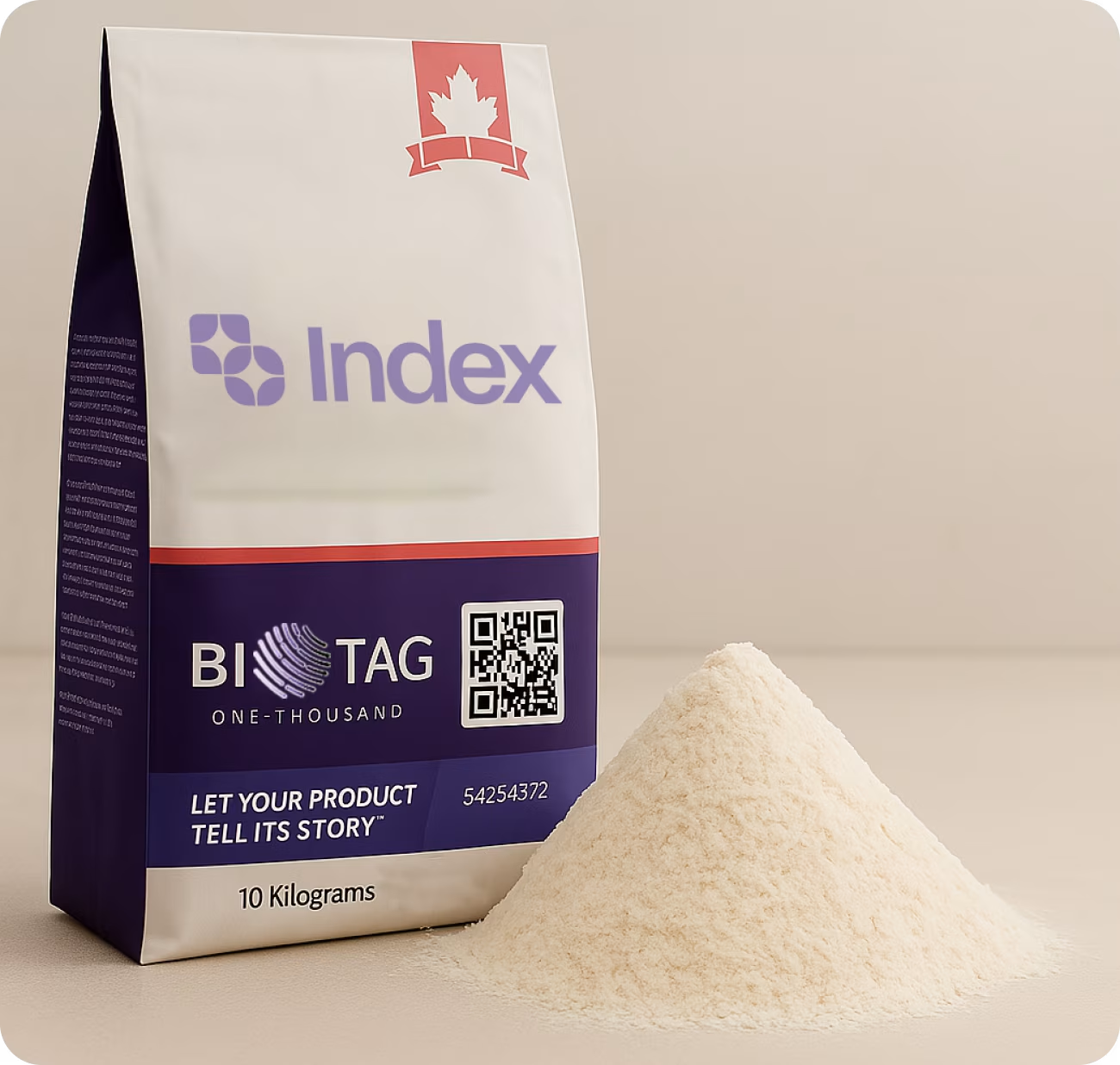
Index Bio has secured a Japanese patent for its BioTag technology, marking a significant milestone in the company’s global intellectual property portfolio and its mission to revolutionize food safety through spatial intelligence and AI-powered biosecurity.
The patent, granted by the Japan Patent Office, covers the core technology underlying BioTags — microscopic, uniquely traceable barcodes made from inactive baker’s yeast that allow food safety professionals to simulate contamination without disrupting production.
What This Means for the Industry
The Japanese patent strengthens Index Bio’s position in the global food safety market, where Japan represents one of the world’s most stringent regulatory environments for food safety and traceability. This recognition by Japanese authorities validates the unique and novel nature of BioTag technology.
“Securing intellectual property in Japan is a testament to the scientific rigor and innovation behind our BioTag platform,” said a spokesperson for Index Bio. “This patent positions us to serve food manufacturers in one of the world’s most demanding regulatory markets.”
Spatial Intelligence and AI-Powered World Models
The BioTag technology is at the forefront of a new era in food safety — one driven by spatial intelligence and AI-powered world models. By generating high-resolution contamination mapping data, BioTags enable:
- Predictive modeling that goes beyond traditional pathogen testing
- Digital twin creation for food manufacturing facilities
- AI-driven risk management based on real contamination flow data
The technology generates data containing +100,000x more detectable information per gram compared to traditional pathogenic data, enabling unprecedented precision in food safety analytics.
About BioTag Technology
BioTags are uniquely traceable microscopic barcodes made from inactive baker’s yeast, compliant with both US FDA and Health Canada regulations. Applied at trace levels (ppm), they are fully inactivated and have no impact on taste or texture.
With unlimited unique identifiers, BioTags act as proxies for contaminants, allowing food safety professionals to stress-test preventive controls before contamination events occur.